Voice reflection to structured goals: how the goals skill turns thinking into documents that compound
People think about goals loosely. Intentions float around as mental notes, get discussed in passing, maybe written on a sticky note that disappears. Nothing is captured systematically, nothing compounds over time, and every January starts from scratch.
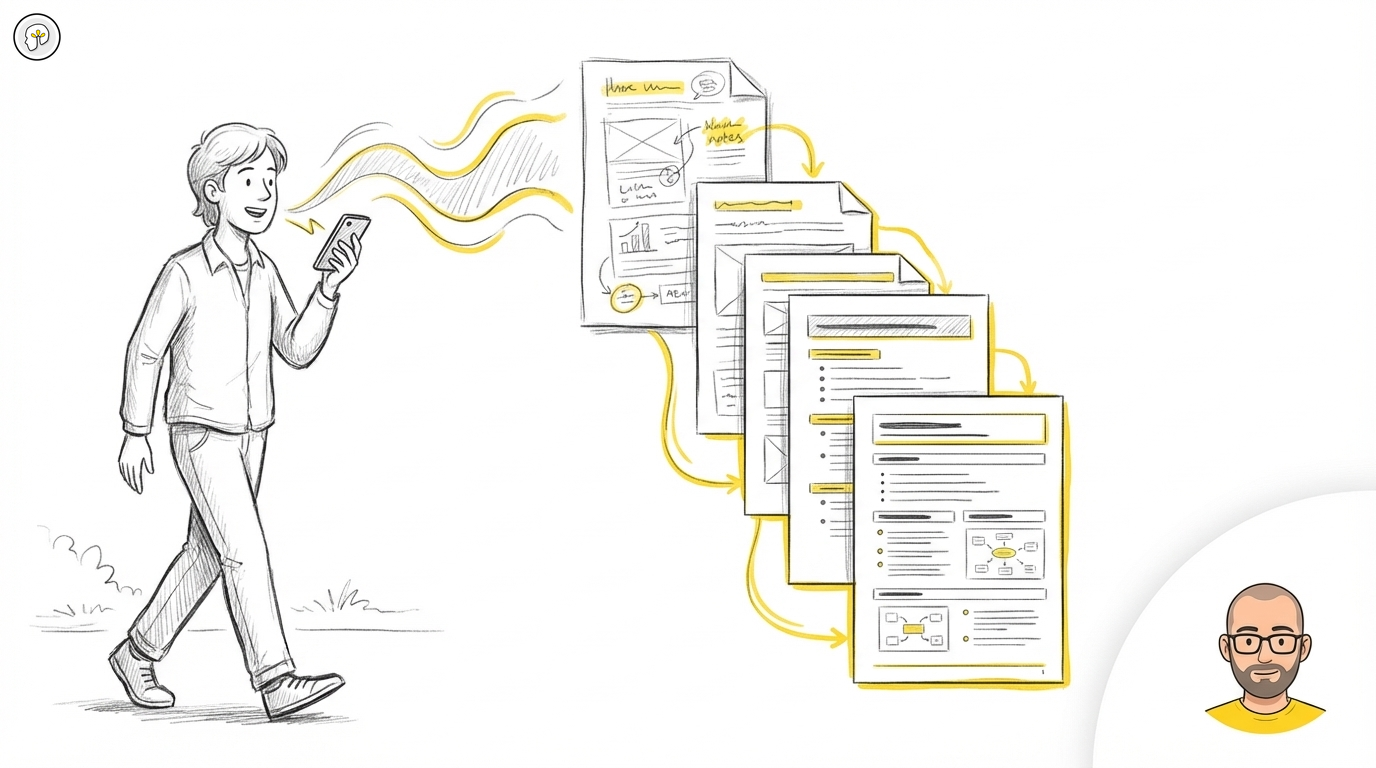
The /goals skill from goals-skills solves this by turning voice reflections into a structured document cascade. You talk through your thinking. The skill processes it into five connected documents — and tells you what you missed.
The problem: unstructured thinking doesn't accumulate
Most goal-setting is a one-time event. You write down intentions at the start of the year, maybe check them quarterly, and by October you've forgotten what you wrote. There's no feedback loop, no structured check-in, and no way to see how your thinking evolves month over month.
The deeper issue: the thinking itself is valuable, but it evaporates. A 30-minute reflection about where you are and where you want to go contains insights about priorities, conflicts, energy levels, and blind spots. Without capture and structure, all of that is lost.
The solution: record, process, complete
The monthly goals cycle works in three steps:
Step 1: Record a voice reflection
Using a structured template with 10 areas (emotional state, highlights, challenges, finances, health, relationships, personal growth, career, priorities, looking ahead), you record yourself talking through each area. No writing, no formatting — just honest spoken reflection.
The template is designed for speaking aloud:
Hur skulle du sammanfatta manaden med tre ord?
...
Vilken kansla har dominerat? Lugn, stress, energi, trotthet, hopp, frustration?
...
Vad ar du mest nojd med denna manad?
You don't need to answer everything perfectly. You don't need to answer everything at all. That's what the next step handles.
Step 2: Process with /goals process
Transcribe the recording and run /goals process. The skill does two things:
- Extracts structured data from your reflection into a monthly check-in document (manadsavstamning) — concrete numbers, status updates, progress indicators
- Generates an ATT KOMPLETTERA section listing everything you didn't cover
Step 3: The ATT KOMPLETTERA pattern
This is the critical differentiator. After processing, the skill tells you exactly what's missing:
ATT KOMPLETTERA:
- Ekonomi: Inga siffror namndes. Komplettera med skuld start/slut, budget
- Halsa: Traning namndes men inga specifika siffror. Antal pass? Vikt?
- Karriar: Inget namndes om Q2-planer. Komplettera med malsattning
You record a supplementary reflection addressing the gaps. Process again. The skill fills in what was missing. This iterative completion ensures the final documents are comprehensive without requiring you to remember everything in one take.
Five document types from a single recording
A single monthly voice reflection cascades into five connected documents:
1. Manadsavstamning (monthly check-in)
Concrete data extracted from your reflection: financial numbers, health metrics, relationship status, career progress. Structured as a table with measurable values, not paragraphs of feelings.
## Ekonomi
| Aspekt | Varde |
|--------|-------|
| Skuld vid manadens start | 450 000 kr |
| Skuld vid manadens slut | 425 000 kr |
| Forandring | -25 000 kr |
| Pa ratt spar mot malet? | [x] Ja |

## Halsa
| Aspekt | Varde |
|--------|-------|
| Antal traningspass | 12 |
| Langsta lopning | 8 km |
2. Manadsreflektion (monthly reflection)
The qualitative companion to the check-in. Captures the thinking, the emotional state, the insights that numbers can't express. This is where you notice patterns — "third month in a row where energy drops mid-month" or "career satisfaction consistently tied to autonomy, not title."
3. Manadsinspiration (monthly inspiration)
Goals and aspirations extracted from the reflection, organized by life area. Not a to-do list — an articulation of what you're working toward next month and why. Updated monthly, it shows how your aspirations evolve.
4. Arsplan (yearly plan)
The annual document that aggregates monthly reflections into a coherent year plan. Updated each month based on new check-in data. By month 6, your yearly plan reflects actual reality, not January's optimistic guesses.
5. Arlig reflektion (yearly reflection)
An annual deep-dive guided review. Fed by 12 months of monthly data, this isn't starting from scratch — it's synthesizing a year of structured thinking into lessons and direction for the next year.
The cascade flow
Voice recording (monthly, 20-40 min)
    |
    v
Transcription
    |
    v
/goals process
    |
    +---> Manadsavstamning (concrete data)
    +---> ATT KOMPLETTERA (gap detection)
    |         |
    |         v
    |     Supplementary recording
    |         |
    |         v
    |     Completed manadsavstamning
    |
    +---> Manadsreflektion (qualitative insights)
    +---> Manadsinspiration (next month focus)
    +---> Arsplan (updated yearly plan)
    |
    v
After 12 months: Arlig reflektion (yearly synthesis)
Each month builds on the previous. The January check-in establishes baselines. February shows trajectories. By June, you have enough data to see real patterns. By December, the yearly reflection writes itself because the data is already structured and tracked.
Why voice, not writing
Writing about goals activates your editor brain. You self-censor, you polish, you write what sounds good rather than what's true. Speaking bypasses that filter.
Kod. Projektdokumentation. Offerter. Avtal. Sammanfattningar. Motesanteckningar. Det ar allt text. Och text ar data. Data kan processas.
— "Text ar data" (tomasandre.se)
Voice is the most natural form of reflection. Transcription turns it into text. Text is data. Data can be processed into structure. The goals skill is the processing step.
You don't need to be articulate or organized when speaking. The skill handles organization. You just need to be honest.
The compound effect
Month 1: You have a check-in and a reflection. Useful but not transformative.
Month 3: You start seeing patterns. "My energy correlates with exercise frequency" or "financial stress drops when I track weekly."
Month 6: Your yearly plan is grounded in reality. Aspirations that aren't progressing get honest reassessment. Things that are working get more investment.
Month 12: The deep yearly reflection has 12 months of structured data to synthesize. You're not guessing about the year — you're analyzing it.
This compounding only works because the data is structured consistently. Free-form journal entries can't be compared month-over-month. Structured documents with consistent fields can.
Practical: getting started
The goals-skills repository includes:
- The
/goalsskill for Claude Code (process, guide, and template modes) - Monthly reflection template (designed for voice recording)
- Monthly check-in template (structured data extraction)
- Monthly inspiration template (next month focus)
- Yearly plan template
- Yearly reflection template
After saving any document, cascade updates automatically offer to create or update related files — progressing from monthly reflection through check-in, inspiration, and annual plan.
The monthly cycle takes about 45 minutes total: 20-30 minutes recording, 5 minutes processing, 10 minutes reviewing and completing gaps. That's less time than most people spend thinking about goals without capturing anything.
Start with one month. See what the structured output reveals about your own thinking. The ATT KOMPLETTERA section alone — seeing what you consistently avoid talking about — is worth the exercise.
Category: Methodology Published: 2026-02-26